What a Hardstuck Marvel Rivals Player Looks Like in 2026 When a Grandmaster Spectates
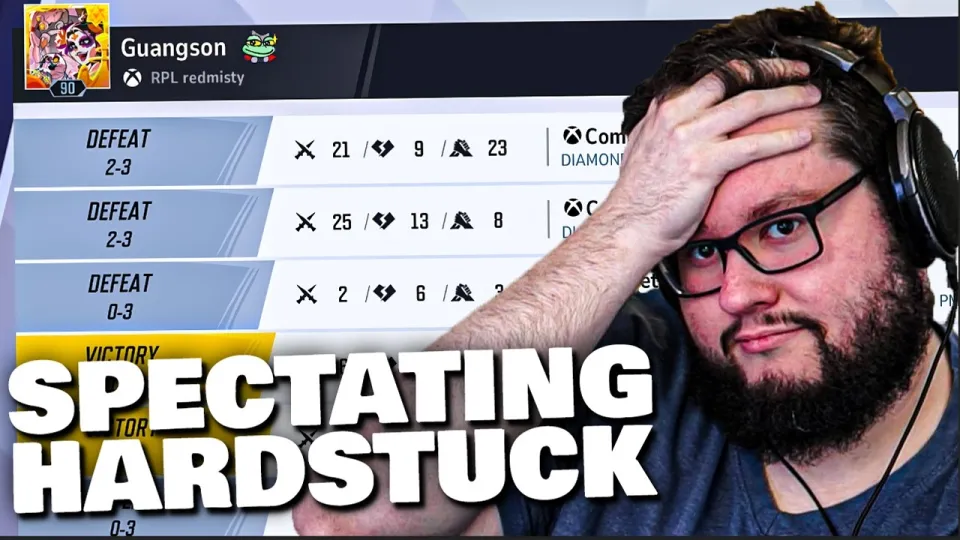
Video: I Spectated Someone Who Claimed To Be Hardstuck In Marvel Rivals
Want articles like this for your own video to promote it on YouTube and Google? Order them through the Telegram bot @sat_sit_bot. It writes articles around your video, embeds the video and publishes them on popular niche websites (no ads). Try it free: 50 articles on us.
· based on the channel Flats
Key takeaways
- Flats spectated a Marvel Rivals player who insisted his rank was the fault of teammates, not his own play.
- The player was in Grandmaster while showing fundamentals far below that level, including playing Dagger without ever using Cloak.
- He described himself as a Spider-Man main, a detail viewers tied to his refusal to take accountability for losses.
- Repeated mistakes included walking past a health pack while looking for one and wasting support invisibility as a flank tool.
- The lesson: in Marvel Rivals, ego and a negative win rate can still climb, but the habits stay visible to anyone watching.
Being hardstuck in Marvel Rivals is almost never about the rank system and almost always about the player. When a Grandmaster-level analyst spectates someone who blames teammates for every loss, the pattern that emerges is consistent: poor positioning, abilities used backwards, resources ignored and zero accountability. That is exactly what happened when Flats, a long-time Overwatch coach and streamer who now covers Marvel Rivals on his Twitch channel, sat down to review a player who claimed the matchmaker was holding him back.
What a hardstuck Marvel Rivals player actually looks like
The most striking detail of the review is the rank itself: the player was sitting in Grandmaster, one of the highest tiers in Marvel Rivals, while making mistakes that belong several divisions lower. That gap is the whole point. Marvel Rivals rewards time invested as much as skill, so a player with a negative win rate can still drift upward on strong teammates and generous point gains. The result is a lobby where a Grandmaster badge sits on top of Silver-level decisions, and the player genuinely believes the badge reflects his ability.
The specific errors are the ones any coach would flag first:
- Playing Dagger for the entire match without ever switching to Cloak, effectively throwing away half of the hero's kit and the invisibility that makes the duo strong.
- Using that invisibility as an escape or flank tool instead of a defensive cooldown for the backline, which leaves the team exposed at the exact moment it needs healing.
- Walking straight past a health pack while visibly searching for a health pack, a moment that needs no commentary to land.
- Blaming the team in voice and chat while repeating the same positioning error every fight.
None of these are mechanical failures. They are decisions, and decisions are fixable — which is precisely why the player's claim of being hardstuck is so frustrating to watch.
The Spider-Man main excuse and the accountability problem
Self-identified Spider-Man mains have a reputation in Marvel Rivals for a reason: the hero rewards individual flashiness, and that playstyle trains players to measure their performance in kills rather than in fights won. The spectated player fit the stereotype exactly. He talked about his damage and his picks, never about the space he gave up, the support he left undefended, or the ultimate he fed into a losing fight.
This is the core of the ego problem in Marvel Rivals. A player who never reviews his own deaths will never improve, no matter how many hours he queues. The review makes the contrast obvious: the same player who insists his teammates are the problem is the one who skipped a health pack, wasted a defensive ultimate and never once used the other half of his hero's kit. Viewers watching the breakdown repeatedly noted that this is the teammate everyone dreads seeing at 99 out of 100 points toward a rank-up — not because he is malicious, but because he is confident and wrong at the same time.
Why the Cloak and Dagger pick is the perfect case study
Cloak and Dagger is one of the most flexible support picks in Marvel Rivals, and that flexibility is the entire reason the hero exists. Dagger handles healing, area denial and chip damage; Cloak brings damage amplification, a blinding wall and the shared invisibility that lets the duo reposition or dodge a burst ultimate. A player who stays on Dagger for a full match is running at roughly half capacity and calling it a strategy.
There is a second layer to the mistake. Support invisibility is not a flanking tool. It is a way to keep the backline alive through a dive, to reset a losing fight, or to set up a damage-amplified burst on a priority target. Using it to sneak around the map means the moment a Magneto or a Spider-Man dives your co-support, the cooldown is already gone. That single habit explains more lost games than any matchmaking complaint ever will.
Typical viewer questions about hardstuck ranks in Marvel Rivals
Spectating videos like this one always raise the same doubts, and they deserve direct answers.
- Can teammates really hold you back? Sometimes, in a single match. Over fifty matches, no. The player in the review proved the opposite of his own argument: his team was carrying him, not sabotaging him.
- Does a negative win rate mean you cannot climb? In Marvel Rivals, rank points and protection systems mean you can climb slowly even below a 50% win rate. Climbing and improving are different things, and conflating them is how players end up in Grandmaster with Silver habits.
- Is the metal-rank perspective relevant? Yes. Lower-ranked viewers were the most vocal about how discouraging it is to see this level of play wearing a Grandmaster badge, because it confirms that rank alone tells you very little about a player.
- What should a genuinely stuck player do first? Pick one hero, learn every ability on it, and review one lost match per session looking only at deaths. That single habit separates players who climb from players who blame.
What the review teaches about improving in Marvel Rivals
Improvement in Marvel Rivals comes from removing the excuses, not from adding hours. The player in this breakdown had the rank, the playtime and the confidence; what he lacked was the willingness to look at his own decisions. Three habits would have changed the outcome of the session entirely:
- Learn the full kit of your main before you call yourself hardstuck — every stance, every cooldown, every passive.
- Track your support cooldowns as team resources, not personal escape buttons.
- Watch your own deaths and ask what you could have done differently before you ask what your teammates should have done.
The humor in the review comes from how recognizable the behavior is. Nearly every player has been this person for at least one match, and the ones who improve are the ones who laugh at it and change something.
Where to watch the full breakdown and follow Flats
Flats streams Marvel Rivals and Overwatch analysis regularly, and the spectate format is where the channel is at its most useful. If you want to see live reviews, ranked climbs and coaching sessions as they happen, the main hub is the Flats Twitch channel, where you can watch live and join chat during the next spectate. The channel's other platforms are collected below.
- Twitch: https://www.twitch.tv/flats
- Discord: https://discord.gg/flats
- Twitter: https://twitter.com/Flats_Ow
- TikTok: https://www.tiktok.com/@flats_ow
- Facebook: https://www.facebook.com/FlatsTTV
Final thoughts on the hardstuck Marvel Rivals myth
Hardstuck is a story players tell themselves to avoid reviewing their own gameplay, and this spectate session dismantles that story in about an hour. A Grandmaster player who never switches to Cloak, wastes invisibility, ignores health packs and blames his team is not trapped by the matchmaker — he is trapped by his own habits. The value of the breakdown is that it makes those habits visible and specific, which is the first step toward fixing them. Flats, who built his audience on exactly this kind of honest, unsparing analysis, turns a single ranked match into a lesson any Marvel Rivals player can apply in their next queue. If you want more of it, catch him live at https://www.twitch.tv/flats.
Source: I Spectated Someone Who Claimed To Be Hardstuck In Marvel Rivals · Markdown version
Questions & answers
Can teammates actually hold you back in Marvel Rivals?
In a single match, yes — one weak player can decide the outcome. Over a long stretch of games, no. The player reviewed in this spectate session blamed his team while making fundamental errors, which showed the opposite of what he intended: his teammates were carrying him, not sabotaging him.
How can a player with a negative win rate reach Grandmaster in Marvel Rivals?
Marvel Rivals awards rank points for wins and protects players from heavy losses, so consistent playtime can push someone upward even below a 50% win rate. That means a Grandmaster badge does not guarantee Grandmaster-level decisions, and spectating reviews frequently expose that gap.
Why is staying on Dagger for a whole match a mistake?
Cloak and Dagger is designed as a two-stance hero. Dagger provides healing and area control, while Cloak adds damage amplification, a blinding wall and shared invisibility. Ignoring Cloak means giving up half the kit, including the defensive cooldown that keeps a backline alive through a dive.
What is the fastest way for a hardstuck player to start improving?
Pick one hero and learn every ability, then review one lost match per session while looking only at your own deaths. Asking what you could have done differently before blaming teammates is the habit that separates players who climb from players who stay stuck.